

The stock market can feel confusing when every article, video, or app throws new words at beginners. Terms like IPO, dividend, Sensex, Nifty, portfolio, volatility, and stop-loss may sound technical at first. Yet, once their meanings become clear, the market starts feeling easier to understand.
This guide explains basic stock market terms for beginners in simple language. It does not push you to invest quickly or follow risky tips. Instead, it helps you understand the common words you may see while reading about shares, trading, investing, or market news.
Disclaimer: This article is for educational purposes only. It does not provide financial advice, investment advice, stock recommendations, trading signals, or guaranteed returns. Stock market decisions involve risk, so readers should research carefully and make choices based on their own financial situation.
What is the Stock Market?

The stock market is a place where people buy and sell shares of listed companies. When a company lists its shares on a stock exchange, investors can trade those shares through brokers and online platforms.
For beginners, the stock market is easier to understand when it is seen as a marketplace. Companies offer shares, buyers purchase them, sellers sell them, and prices move based on demand, supply, news, company performance, and market sentiment.
- Listed Company: A company whose shares are available for trading on a stock exchange.
- Buyer: A person or institution that purchases shares.
- Seller: A person or institution that sells shares.
- Market Price: The current price at which a share is bought or sold.
Why Beginners Should Learn Stock Market Terms First
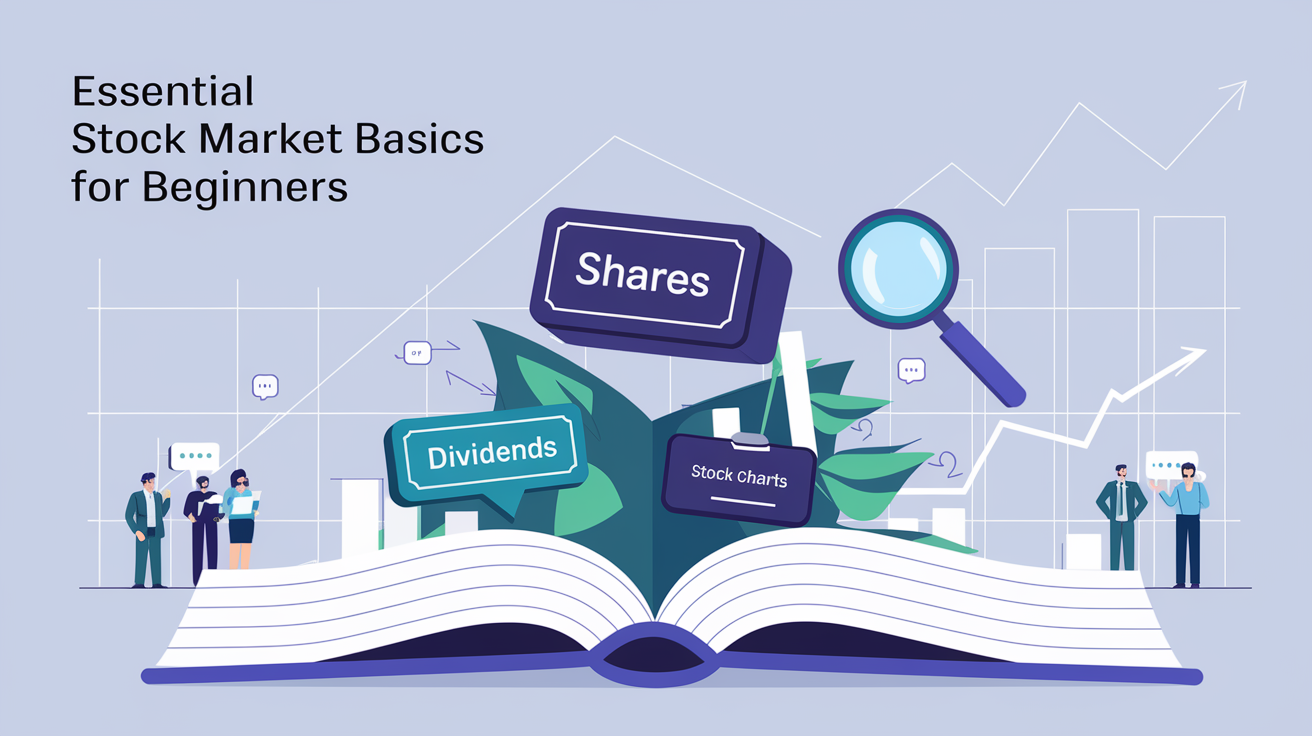
Beginners often feel confused because stock market words appear everywhere before their meanings are clear. Learning these terms first helps readers understand market news, company updates, trading apps, and beginner guides with less stress. Beginners can also cross-check common investing words through Investor.gov’s investing glossary, which explains many investment terms in one place.
It also helps readers avoid blindly following market tips. When words like IPO, dividend, volatility, broker, Demat account, and stop-loss start making sense, the stock market becomes easier to read and understand.
Readers who want the next practical step can also read this guide on stock market basics for beginners after learning these terms.
- Better understanding: Terms make market articles, videos, and app screens easier to follow.
- Less confusion: Beginners can separate simple meanings from complicated advice.
- Safer learning: Clear terms help readers avoid reacting to every market tip.
- Stronger base: A glossary gives readers a foundation before they explore investing steps.
Basic Stock Market Terms Beginners Should Know

Some terms form the base of stock market learning. These words appear again and again in almost every beginner article. Once you understand them, the rest of the topic becomes much easier.
- Stock: A stock means ownership in a company. When someone buys a stock, they own a small part of that company. Investor.gov also explains that stocks give stockholders a share of ownership in a company, which makes it a useful beginner reference.
- Share: A share is one unit of ownership in a company. People often use the words stock and share in a similar way.
- Stock Market: The stock market is a place where people buy and sell shares of listed companies.
- Investor: An investor buys shares or other assets intending to build value over time.
Share Market and Exchange Terms
Many beginners hear words like NSE, BSE, Sensex, and Nifty but do not understand what they mean. These terms are common in India, especially when people talk about daily market movement. Indian readers can also check the NSE investor education material for capital market learning resources.
You can also explore more trading education guides on The Digital Priyanka (TDP) to understand related market topics in one place.
- Stock Exchange: A stock exchange is a platform where shares are bought and sold in an organized way.
- NSE: NSE means National Stock Exchange. It is one of the major stock exchanges in India.
- BSE: BSE means Bombay Stock Exchange. It is one of the oldest stock exchanges in Asia.
- Sensex and Nifty: Sensex tracks selected companies listed on BSE, while Nifty tracks selected companies listed on NSE.
Company and Investment Terms
These terms help beginners understand how companies raise money, reward shareholders, and show financial value. They also help readers follow business news with better clarity.
- IPO: IPO means Initial Public Offering. A company brings an IPO when it offers its shares to the public for the first time.
- Dividend: A dividend is a part of a company’s profit shared with eligible shareholders.
- Market Capitalization: Market capitalization means the total market value of a company’s shares.
- Portfolio: A portfolio means the collection of investments a person holds, such as shares, mutual funds, or other assets.
Account and Platform Terms
Before buying or selling shares, beginners often encounter account-related terms. These terms explain the basic setup used for market participation. SEBI’s investor education page also has useful material on opening trading and Demat accounts, IPOs, corporate actions, and securities market basics.
- Demat Account: A Demat account holds shares in electronic form. It works like a digital storage account for securities.
- Trading Account: A trading account helps a person buy and sell shares through a broker or trading platform.
- Broker: A broker is a person, company, or online platform that helps investors buy and sell shares.
- Brokerage: Brokerage is the fee charged by a broker for facilitating a trade or investment transaction.
Market Movement Terms Explained Simply
Market movement terms tell whether prices are rising, falling, or changing quickly. These words appear often in market news and trading discussions.
- Bull Market: A bull market means prices are rising or market confidence looks strong.
- Bear Market: A bear market means prices are falling or market confidence looks weak.
- Volatility: Volatility means frequent or sharp price movement. A highly volatile stock can move up and down quickly. Once these basic terms feel clear, readers can later explore broader ideas like quantum trading strategies with better context.
- Liquidity: Liquidity means how easily an asset can be bought or sold without causing a major price change.
Trading Terms Beginners Often See
Some terms belong more to trading than long-term investing. Beginners should understand these words even if they do not plan to trade actively. This helps them avoid confusion while reading market content.
If you want to compare different trading styles later, this guide on types of trading can help you understand the main approaches.
- Market Order: A market order means buying or selling a share at the current available market price.
- Limit Order: A limit order lets a person set a specific price for buying or selling.
- Stop-Loss: A stop-loss is an order used to limit possible loss when a trade moves in the wrong direction.
- Intraday Trading: Intraday trading means buying and selling shares on the same trading day.
Beginners who want to understand same-day trading separately can read this guide on day trading for beginners.
Risk and Beginner Safety Terms
Every beginner should understand risk-related terms before going further. These words remind readers that the stock market can move in both directions. Learning them helps people think carefully instead of reacting emotionally. For a broader official reference, SEBI’s securities market booklet explains market basics and investor-related concepts.
Readers interested in safer AI-related learning can also read these AI-trading safety rules for beginners.
- Risk Tolerance: Risk tolerance means how much market loss or price movement a person can handle emotionally and financially.
- Diversification: Diversification means spreading money across different investments instead of putting everything in one place.
- Long-Term Investing: Long-term investing means holding investments for a longer period instead of reacting to short-term price changes.
- Capital Loss: A capital loss happens when someone sells an investment for less than the price they paid.
How to Build Your Own Stock Market Glossary
Beginners do not need to memorize every stock market term in one day. A better way is to keep a small personal glossary while reading market news, company updates, or trading app screens.
Whenever a new word appears, write it down with a simple meaning and one example. Over time, this habit can make stock market learning feel less confusing.
- Start with common words: Add terms like stock, share, IPO, dividend, broker, and Demat account first.
- Write simple meanings: Use one-line explanations instead of complicated definitions.
- Add real examples: Connect each term with a basic example so it becomes easier to remember.
- Update it slowly: Keep adding new words as you read more about the market.
Common Term-Related Mistakes Beginners Should Avoid
Beginners often make mistakes because they read stock market words without understanding their exact meaning. A term may look simple, but using it wrongly can create confusion while reading market news, app screens, or beginner guides.
- Confusing stocks and shares: Many people use both words together, but a share usually means one unit of ownership.
- Ignoring risk words: Terms like volatility, stop-loss, and risk tolerance should never be skipped.
- Mixing trading and investing: Intraday trading and long-term investing are not the same thing.
- Following tips without clarity: Beginners should understand terms before reacting to market opinions.
Final Thoughts
Learning basic stock market terms for beginners is one of the smartest first steps before reading market news, opening an account, or comparing investment options. These terms build clarity and reduce confusion.
This glossary gives beginners a simple base. After understanding these meanings, readers can move to a practical guide on stock market basics for beginners and learn how to start with a careful plan.
Note: Stock market basics can help you understand key terms and risks, but they cannot remove market uncertainty. Use this article for learning only, not as financial advice or a promise of results.
FAQs
1) What are basic stock market terms?
Basic stock market terms are common words used to explain shares, exchanges, investors, accounts, trading, and market movement. These words help beginners understand how the stock market works.
2) What is the difference between stock and shares?
A stock usually refers to ownership in a company, while a share means one unit of that ownership. In daily language, many people use both words in a similar way.
3) What is a Demat account?
A Demat account holds shares and securities in electronic form. It keeps investments digitally instead of using physical share certificates.
4) What is a trading account?
A trading account helps a person buy and sell shares through a broker or online platform. It works along with a Demat account.
5) What does IPO mean?
IPO means Initial Public Offering. A company brings an IPO when it offers its shares to the public for the first time.
6) What is a dividend?
A dividend is a part of a company’s profit shared with eligible shareholders. Not every company gives dividends.
7) What is a bull market?
A bull market means the market or stock prices are rising. It often shows strong investor confidence.
8) What is a bear market?
A bear market means the market or stock prices are falling. It often shows weak confidence or negative market sentiment.
9) What is volatility in the stock market?
Volatility means price movement. A volatile stock can move up or down quickly within a short time.
10) Why should beginners learn stock market terms first?
Beginners should learn stock market terms first because clear meanings reduce confusion. This helps readers understand financial content before making any money-related decisions.